Most companies do not struggle with the idea of DEI. They struggle with execution. Training is spread across too many places at once. Only part of the workforce ever sees it. HR cannot confirm who finished what. Leaders cannot pull clean audit reports on demand. When laws change, updates drag on. Every small change turns into heavy work.
Employees feel it too. Many view DEI as compliance theater that fails to address actual behavior. Some feel blamed. Others feel invisible. Neurodivergent employees, frontline staff, low-literacy workers, and external partners are pushed to the edges by content that does not match how they learn. Meanwhile, real issues keep stacking up. Harassment. Cultural friction. Quiet resentment. Conflict that lingers and spreads.
This guide is not about ideal DEI. It is about workable DEI. The kind that scales, tracks, engages, and actually changes how people behave at work.
This guide is for:
- HR and L&D teams struggling with delivery, tracking, and compliance
- Managers dealing with conflict, complaints, and team behavior
- Business leaders responsible for audits, legal risk, and retention
- Organizations training frontline staff, partners, or multilingual teams
What DEI Really Means Today
DEI stands for Diversity, Equity, and Inclusion. These three ideas are related but not the same. Today, DEI is not just about policies or training sessions. It is about how people are treated at work, how decisions are made, and whether everyone has a real chance to succeed. When done right, DEI affects daily behavior, team culture, leadership choices, and business results.
Understanding Diversity
Diversity means having people with different backgrounds, identities, and experiences in the workplace. This includes visible differences like race, gender, and age. It also includes less visible differences like education, language, religion, disability, work style, and thinking patterns.
Diversity is about who is present in the organization. A diverse team brings different views to the table, which can improve problem-solving and reduce blind spots. But diversity alone does not guarantee fairness or inclusion. It only describes the mix of people.
Understanding Equity
Equity means fairness in access, support, and opportunity. It recognizes that not everyone starts from the same place and that some people may need different levels of support to succeed.
For example, equity can include:
- Providing assistive tools for employees with disabilities
- Offering flexible work options for caregivers
- Giving extra learning support to those with limited tech skills
Equity is about removing barriers, not lowering standards. The goal is to make sure everyone has a fair chance to grow, perform, and advance.
Understanding Inclusion
Inclusion means people feel respected, heard, and safe at work. It answers the question: once people are hired, do they truly belong?
An inclusive workplace is one where:
- Employees can speak up without fear
- Different views are taken seriously
- People are not ignored, mocked, or sidelined
- Managers actively involve everyone in decisions
You can have diversity without inclusion. People may be present but not valued. Inclusion is what turns diversity into real participation.
Expanding DEI Beyond Race and Gender
Modern DEI still includes race and gender, but also extends to:
- Neurodiversity (such as autism, ADHD, dyslexia)
- Physical and hidden disabilities
- Mental health
- Language and literacy levels
- Socioeconomic background
- Age and generational differences
- Remote and frontline workers
- External partners and contract workers
Many employees who struggle the most with workplace systems are not always visible. This is why DEI today focuses more on access, communication, psychological safety, and fair treatment in daily work, not just representation numbers.
True DEI is not about labels. It is about building a workplace where different people can work well together without fear, bias, or unfair limits.
Watch: What Is Diversity Training in the Workplace?
Why DEI Training Fails
Many DEI programs fail not because the goal is wrong, but because the way the training is designed and delivered does not match real workplace needs. Employees often walk away without clear skills, behavior change, or trust in the process.
Ineffective and Not Behavior-Changing
A common problem is that DEI training focuses too much on theory and not enough on daily behavior. People may learn definitions, but they are not taught how to apply them differently in real-life situations. Without practice, examples, and follow-up, most employees return to old habits. One-time workshops also fade quickly because there is no reinforcement through managers, systems, or performance goals.
Perceived as Box-Checking
Many employees feel DEI training exists only to protect the company from legal risk or bad press. When training is rushed, mandatory, and disconnected from real work, it feels like a formality instead of a serious effort. This creates low trust and low engagement. When people believe the goal is only compliance, they stop taking the message seriously.
Divisiveness and Backlash
Some programs unintentionally create resentment. This often happens when training feels blaming, shaming, or overly political. When people feel they are being labeled as the problem rather than guided toward better behavior, they shut down or push back. Instead of reducing conflict, poorly framed DEI sessions can increase tension between teams.
Lack of Business Value and Accountability
Many organizations fail to connect DEI training to real business goals. There is often no clear link to performance, promotion, manager evaluation, or team outcomes. Without ownership, metrics, or follow-through, DEI remains a side activity instead of a part of core operations. When leaders are not held accountable, employees notice.
Poor Content and Jargon-Heavy Delivery
A major complaint is that DEI content is often boring, confusing, or full of buzzwords. Long slide decks, scripted videos, and vague concepts lose attention fast. Employees want practical guidance, not abstract language. When training feels out of touch with real work situations, it loses credibility.
Why DEI Training Still Matters
Despite its flaws in execution, DEI training still plays an important role when it is designed with purpose, realism, and accountability. When done well, it supports both people and performance.
Better Decision-Making and Innovation
Teams made up of people with different backgrounds and ways of thinking can spot risks faster and generate better ideas. DEI training helps employees understand how bias affects decisions and how to listen to perspectives they may not naturally consider. This leads to stronger problem-solving and fewer blind spots.
Stronger Talent Attraction and Retention
Employees today care deeply about fairness, safety, and respect at work. When people feel included and supported, they are more likely to stay. Companies that ignore these areas often struggle with higher turnover, lower engagement, and damaged employer reputation. DEI training supports the kind of culture people want to work in.
Reduced Legal and Compliance Risks
Discrimination, harassment, and bias can expose companies to serious legal and financial risk. DEI and harassment training help employees understand boundaries, expected behavior, and reporting processes. When paired with tracking, certification, and audit trails, this training also protects the organization during inspections and legal reviews.
Improved Psychological Safety
Psychological safety means that people can speak up, ask questions, admit mistakes, and share ideas without fear of retribution. DEI training helps teams recognize harmful behaviors like microaggressions, exclusion, and unfair treatment. Over time, this builds trust, improves teamwork, and reduces silent conflict.
When DEI training is practical, continuous, and supported by leadership, it stops being a checkbox and starts becoming part of how work actually gets done.
Core Components of Effective DEI Training
Effective DEI training is not built on a single workshop or a one-size-fits-all video. It is made up of several practical components that work together to change awareness, behavior, and workplace systems. Each part plays a different role in building a fair and respectful work environment.
DEI 101 Foundations
This is the starting point for most organizations. DEI 101 helps employees understand what diversity, equity, and inclusion actually mean in simple, real-world terms. The goal is not to overwhelm people with theory, but to create a shared baseline of understanding.
This training usually covers:
- Basic DEI definitions
- Why fairness and respect matter at work
- How workplace behavior affects others
When this foundation is clear, later training becomes easier to understand and apply.
Unconscious Bias Training
Unconscious bias training helps people see how hidden assumptions influence decisions, even when they believe they are being fair. These biases can affect hiring, promotions, performance reviews, and daily interactions.
Good bias training focuses on:
- Real workplace examples
- How bias shows up in decisions
- Simple steps to pause and question automatic judgments
The goal is not to blame people, but to help them become more aware and intentional in their choices.
Inclusion Skills Training
Inclusion skills training is where DEI becomes practical. It teaches employees and managers how to behave differently in everyday situations.
This often includes:
- How to run meetings where everyone is heard
- How to give fair feedback
- How to communicate across different backgrounds and work styles
These skills directly shape team culture and working relationships.
Allyship and Bystander Intervention
This part of DEI training focuses on what to do when someone sees unfair, harmful, or disrespectful behavior at work. Many employees want to help but do not know how to step in safely.
Training in this area teaches:
- When and how to speak up
- How to support someone who is targeted
- How to report issues without making situations worse
This shifts responsibility from only HR to everyone in the workplace.
Anti-Harassment and Compliance Training
Anti-harassment and compliance training is required in many regions and industries. It helps employees understand what counts as harassment, discrimination, and misconduct, and what the consequences are.
This training clearly explains:
- What behavior is not allowed
- How to report issues
- What protection employees have when they report concerns
When paired with tracking and certification, it also helps organizations stay audit-ready and legally protected.
Supporting Neurodivergent and Disabled Employees
Modern DEI training must include disability and neurodiversity. Many employees struggle not because of skill, but because systems are not designed for how they think, learn, or process information.
Training in this area helps teams understand:
- Common neurodivergent conditions like autism, ADHD, and dyslexia
- The importance of clear communication and simple processes
- How small accommodations can remove major barriers
This support improves performance, reduces burnout, and helps employees feel safe asking for what they need.
When these components work together, DEI training becomes less about slogans and more about real behavior, real systems, and real outcomes at work.
Get Free Employee Training Software — All Features, Forever.
We've helped 567 companies train 200,000+ employees. Create courses in under a minute with our AI LMS or use 200+ ready-made courses on compliance, harassment, DEI, onboarding, and more!
How to Build a DEI Training Program That Works
A DEI program only works when it is treated like a real business initiative, not a one-time event. It needs clear goals, strong leadership support, the right tools, and regular follow-up. These steps help turn DEI from theory into daily practice.
Step 1: Set Clear, Measurable Goals
Start by defining what you actually want to improve. Vague goals like “build an inclusive culture” are hard to track and easy to ignore. Instead, link DEI goals to real outcomes such as safer reporting, better promotion fairness, reduced complaints, or higher engagement in specific teams.
Your goals should answer three simple questions. What problem are you trying to fix? Who does it affect? How will you know if it improved? Without this clarity, training becomes just another task on a checklist.
Step 2: Secure Leadership Buy-In
DEI training does not work when leaders treat it as an HR-only activity. Employees pay close attention to what leaders support through their actions, not just their words. If managers skip sessions, resist change, or are not held accountable, the entire program loses credibility.
Leaders need to actively attend training, speak openly about its importance, and model fair behavior in their decisions, feedback, and promotions. Their behavior sets the standard for everyone else.
Step 3: Choose the Right Training Delivery Method
The way training is delivered matters as much as the content. Many organizations fail because they rely only on long slide decks, one-time workshops, or static videos. These formats are not well-suited for remote teams, frontline staff, or global workforces.
A strong DEI program uses flexible delivery methods that allow people to learn at their own pace, revisit topics, and apply learning through real scenarios. This is especially important for organizations with high turnover, shift-based work, or multilingual teams.
Step 4: Select Evidence-Based Training Topics
Not all DEI topics lead to genuine behavioral change. It is important to focus on areas that directly affect how people work with each other. These often include bias in decision-making, communication across differences, harassment prevention, fair performance reviews, and inclusive leadership.
Topics should be chosen based on real-world workplace risks, employee feedback, and compliance needs, rather than trends or social media pressure. This keeps training grounded and relevant.
Step 5: Make DEI Training Continuous
One-time training rarely changes long-term behavior. DEI needs to be part of regular learning, just like safety, performance, or leadership development. Short refreshers, scenario-based learning, and regular discussions help reinforce key ideas.
When DEI is treated as a long-term commitment rather than a yearly requirement, it becomes an integral part of how the organization operates.
Step 6: Equip Managers With the Right Skills
Managers play the biggest role in whether DEI succeeds or fails. They shape daily team culture, handle conflict, give feedback, and make many hiring and promotion decisions. If managers are not trained properly, DEI efforts stop at the surface level.
They need practical skills in fair performance management, inclusive communication, handling complaints, and supporting different work needs. Without this, even well-designed DEI programs struggle to create real change.
Step 7: Track Results and Iterate
DEI training should be measured, not assumed to work. Tracking participation, completion, feedback, and behavior-related outcomes helps identify what is working and what is not.
This also supports:
- Audit and compliance needs
- Proof of training completion
- Data-backed improvements
When results are reviewed regularly, programs can be adjusted based on real impact instead of guesswork.
When these steps work together, DEI training becomes structured, practical, and tied to real workplace outcomes instead of being seen as symbolic or performative.
Tools and Resources to Support DEI Programs
DEI training works best when it is supported by the right tools. These tools help organizations deliver training at scale, track progress, collect feedback, and support employees with different needs. Without proper systems, even well-designed DEI programs become hard to manage and easy to ignore.
Learning Management Systems
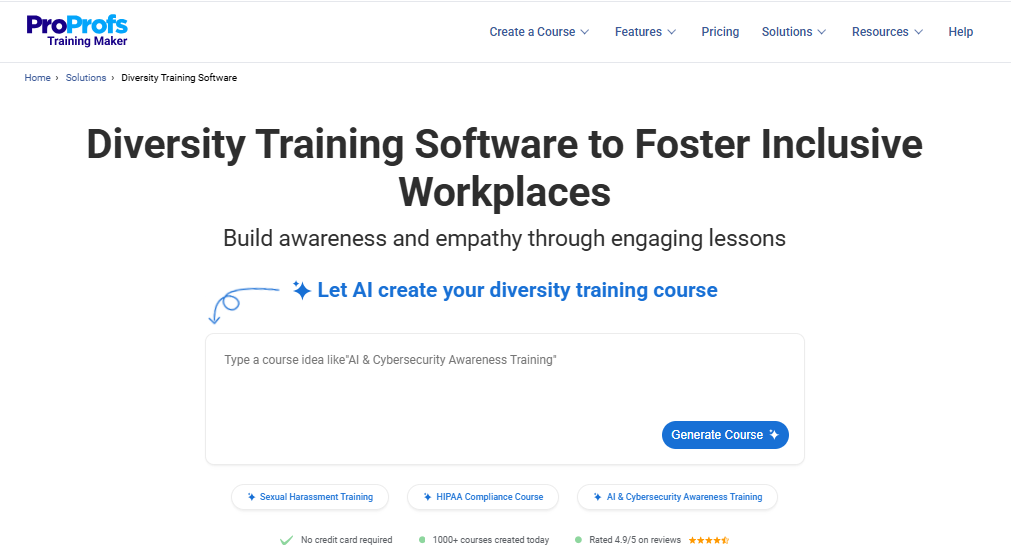
Learning Management Systems, or LMS platforms, help organizations deliver DEI and compliance training in a structured and trackable way. Instead of relying on live sessions, PDFs, or scattered videos, companies can assign courses to specific groups, automate reminders, and track completion in one place.
An LMS also helps with:
- Delivering consistent training across locations
- Supporting mobile and remote learners
- Storing proof of completion for audits and legal needs
For organizations with high turnover, distributed teams, or state-specific compliance rules, this kind of system is often essential.
Assessment and Survey Tools
Assessment and survey tools are used to measure how employees experience the workplace and how DEI efforts are landing. These tools help organizations move beyond guesswork.
They are commonly used to:
- Collect feedback after DEI training
- Measure psychological safety and inclusion
- Track changes in attitudes over time
- Identify problem areas by team or location
When used correctly, surveys help leaders understand what is working and what needs attention, instead of relying only on assumptions.
ERG and Culture-Building Tools
Employee Resource Groups, or ERGs, play a key role in long-term DEI success. These are employee-led groups built around shared identities, interests, or experiences. Culture-building tools help these groups organize events, communicate, and share resources.
These tools support:
- Peer learning and support
- Open discussion about workplace challenges
- Stronger trust between employees and leadership
When ERGs are supported properly, they help turn DEI from a policy into a living part of the culture.
Accessibility and Neurodiversity Support Tools
Accessibility tools help remove barriers for employees with disabilities, learning differences, or mental health needs. This includes tools for screen reading, captioning, simple content design, flexible learning formats, and assistive technologies.
Neurodiversity support tools also help with:
- Reducing sensory overload
- Improving focus and clarity
- Supporting different communication styles
These tools make DEI practical for employees who are often left out by standard workplace systems.
How DEI Training Fits Into Broader Workplace Culture Initiatives
DEI training cannot stand alone as a standalone program. It must be connected to how people are hired, developed, led, and supported throughout their careers. When DEI is built into core workplace systems, it has a much better chance of creating real change.
Integration With Recruitment and Onboarding
DEI should start before someone’s first day at work. Fair hiring practices, inclusive job descriptions, and structured interviews reduce bias at the entry stage. Onboarding is also a key moment to set expectations around respect, behavior, and reporting.
When DEI is part of onboarding:
- New hires understand workplace values early
- Reporting paths are clearer
- Inclusive behavior becomes the norm, not the exception
This prevents many issues before they grow into larger problems.
Integration With Leadership and Manager Training
Leadership training is one of the most important places to embed DEI. Managers control daily decisions that shape fairness and inclusion, such as task assignments, promotions, feedback, and conflict handling.
When DEI is included in leadership development:
- Managers learn how to lead diverse teams
- Bias is addressed where it most affects outcomes
- Accountability becomes part of leadership expectations
Without this link, DEI often stays limited to entry-level training and fails to influence power structures.
Integration With Long-Term Culture Strategies
DEI must be tied to broader culture goals like trust, safety, performance, and retention. This includes how success is rewarded, how complaints are handled, and how change is communicated.
Long-term integration helps ensure that:
- DEI is reinforced through everyday systems
- Behavior change is sustained over time
- Culture evolves with real business needs
When DEI training aligns with long-term culture strategy, it stops feeling like a side project and starts shaping how the organization truly operates.
Moving From Performative to Effective DEI
DEI only creates real change when it moves out of slide decks and into daily work. This means shifting focus from one-time training to long-term behavior, systems, and leadership accountability. Training should be practical, tracked, inclusive of different learning needs, and tied to real workplace risks and outcomes.
The most effective DEI programs do three things well. They solve real problems employees face. They support managers with clear skills and tools. And they measure progress instead of assuming success.
If you want DEI to work in your organization, start small but stay consistent. Pick one clear goal, train the right people first, track what changes, and improve from there. That is how DEI stops being performative and starts shaping a safer, fairer, and more productive workplace.

Let ProProfs AI create your training course

 We'd love your feedback!
What did you like & how can we make it even better?
 Thanks for your feedback!
 Ask Your Question
Have a question? Get expert help to make your decision easier.



![10 Best Compliance Training Software for 2025 [Updated List]](https://www.proprofstraining.com/blog/wp-content/uploads/2023/03/X_Best_Compliance_Training_Software_in_2023.png)